
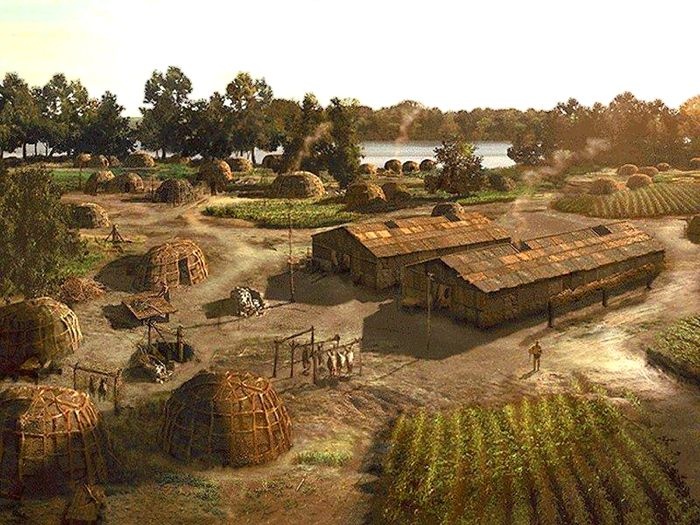
Shawnee Village ( https://www.legendsofamerica.com/ )
The Shawnee
Ohio was home to several Native American tribes, but the Shawnee were prominent among them. Like other eastern woodland Native Americans, they were semi-nomadic, living in often temporary towns during the warm weather where they grew crops (maize, beans and squash), and scattering out into smaller groups in winter to hunt. They lived in wigwams- houses with tree-branch frames covered with bark. Towns would also have a council house for meetings. The Shawnee people had five major divisions or septs, each led by chiefs who were either hereditary or chosen for skill and bravery. In addition to the septs, six clans grouped various family bloodlines. Bravery was highly esteemed by the Shawnee, and they were known as fierce fighters. Other tribes would ally with them because of their strength.
The Shawnee were driven out of the Ohio area in the 1600s by the powerful Iroquois nation, but they returned in the early 1700s and eventually faced American settlers who crossed the Allegheny Mountains and entered the Ohio area, mainly using the Ohio River as a route. They were central to Native American resistance against American expansion in Ohio.
A great split came when some Shawnee moved out west to escape the encroaching white tide in Ohio. It was a very sad parting with those who stayed, who grimly set themselves to defend their land.

Great Council State Park
To learn more about the Shawnee, a great place to visit is Great Council State Park just north of Xenia Ohio. There is a 12,000 square foot interpretive center on the property, which opened in 2024. The center is built in the shape of a Shawnee longhouse.
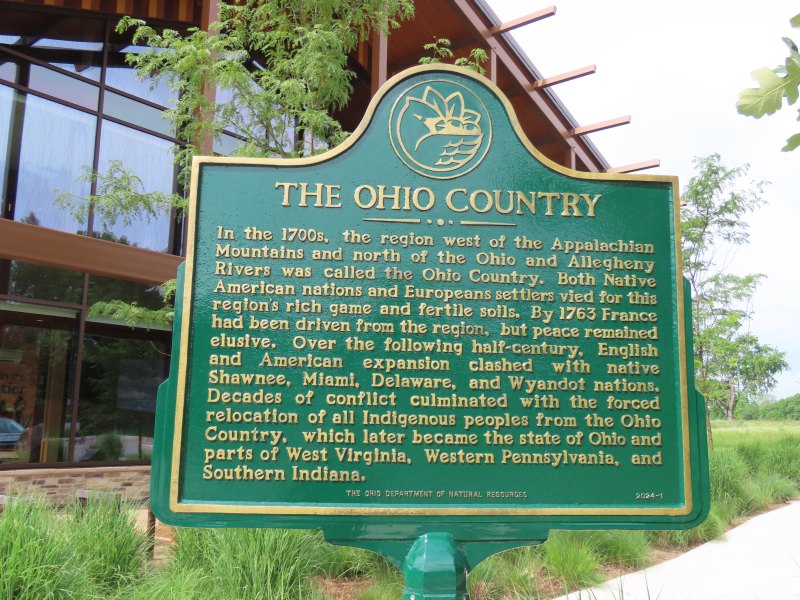
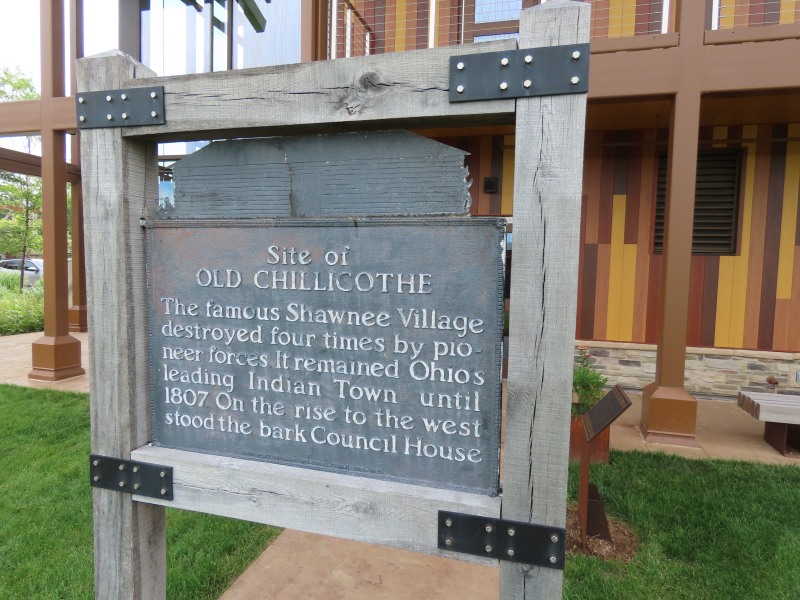
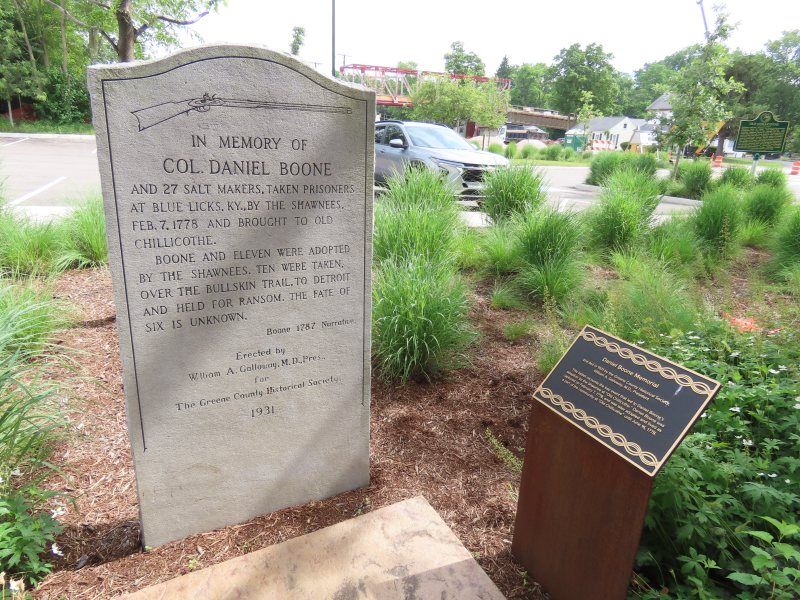
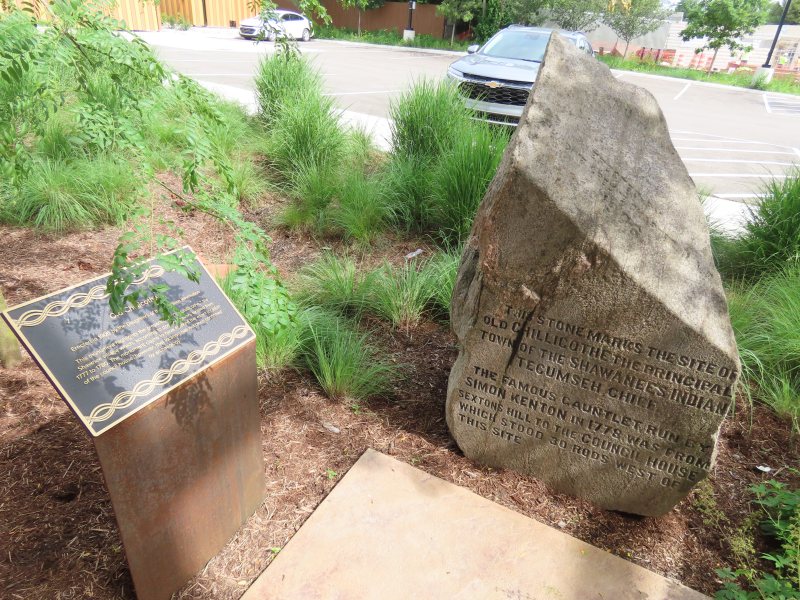
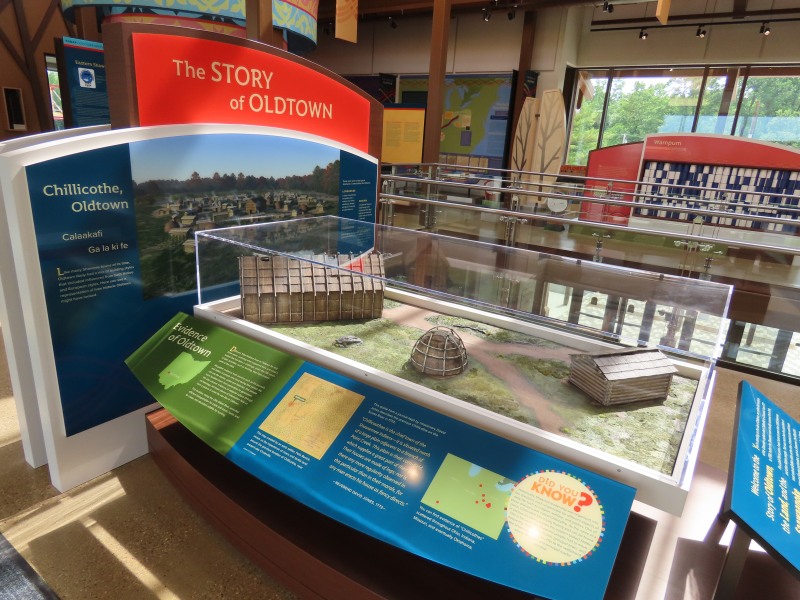
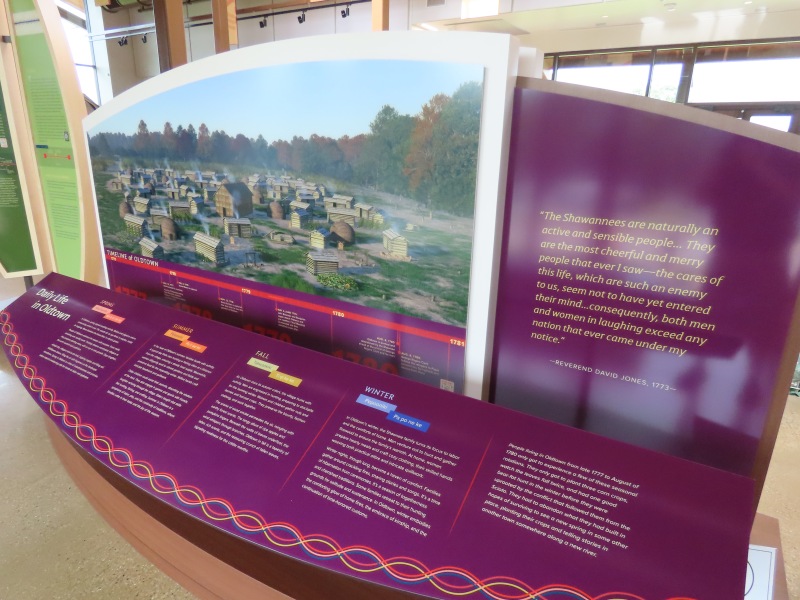
The center is built on the site of Oldtown, also known as Old Chillicothe, a major Shawnee town. Pioneer militias and army units would often destroy Native American towns in retaliation for raids, though they could be rebuilt quickly enough. Burning the crops there often led to lean hungry winters for the tribes.
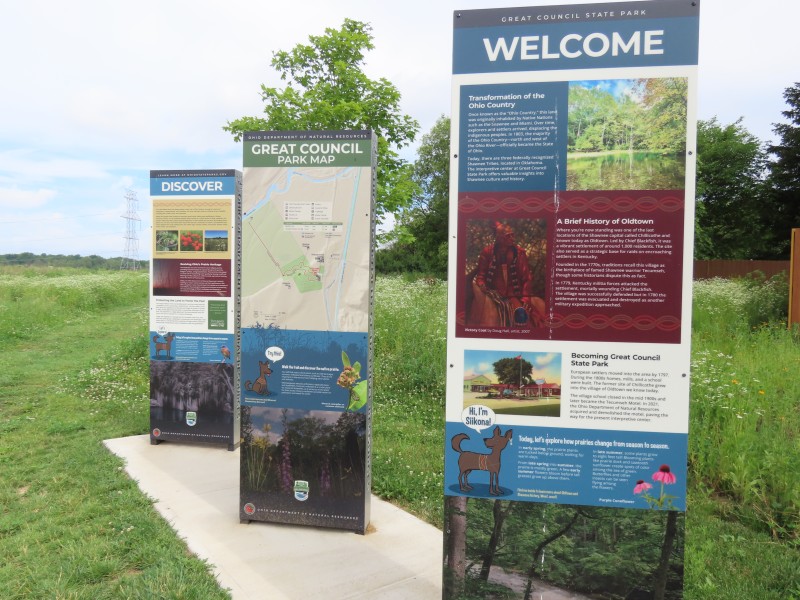
The center is near trails that go down to the Little Miami River through restored prairie land. A nice touch was native Ohio wildflowers in the prairie and around the center.
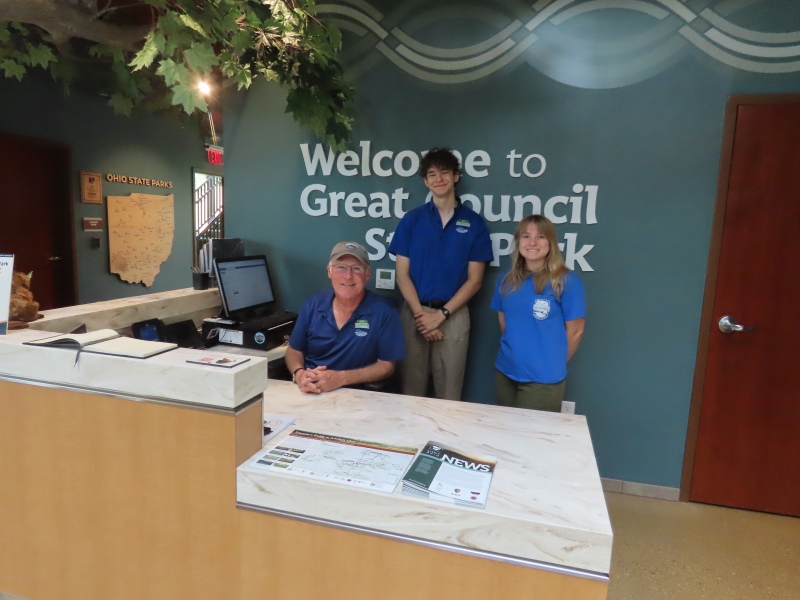
The staff at the center was friendly and knowledgeable.

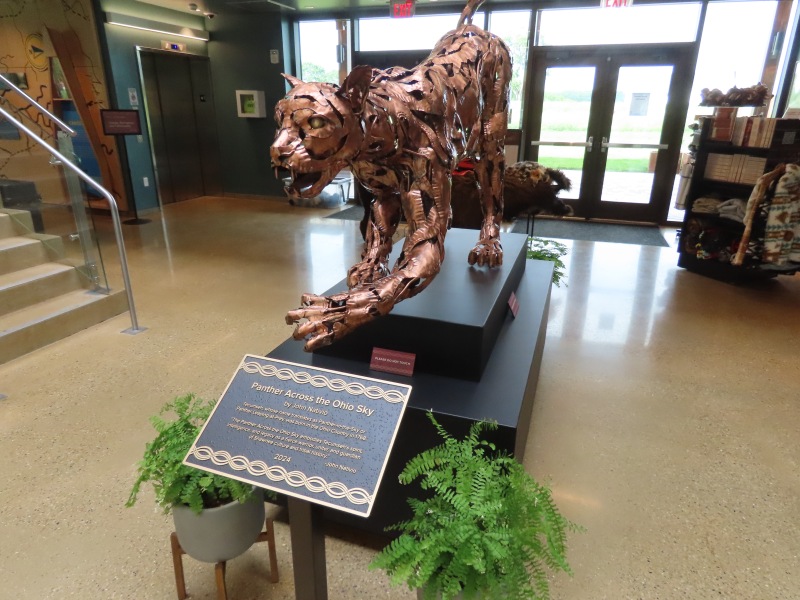
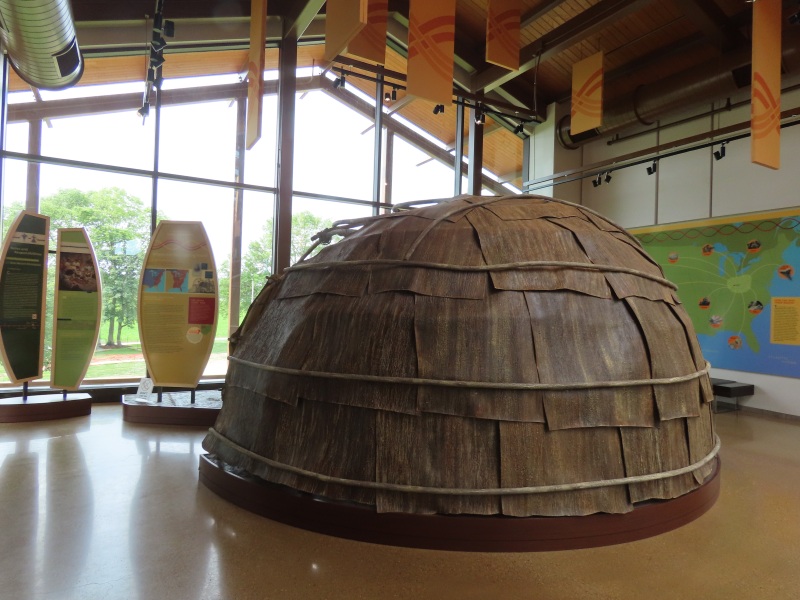
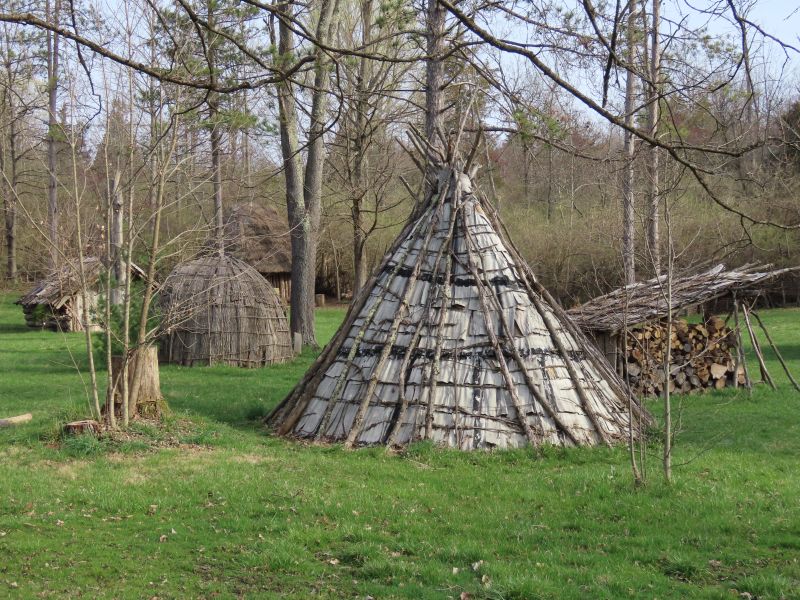
A reproduction of a wigwam, or wegiwa
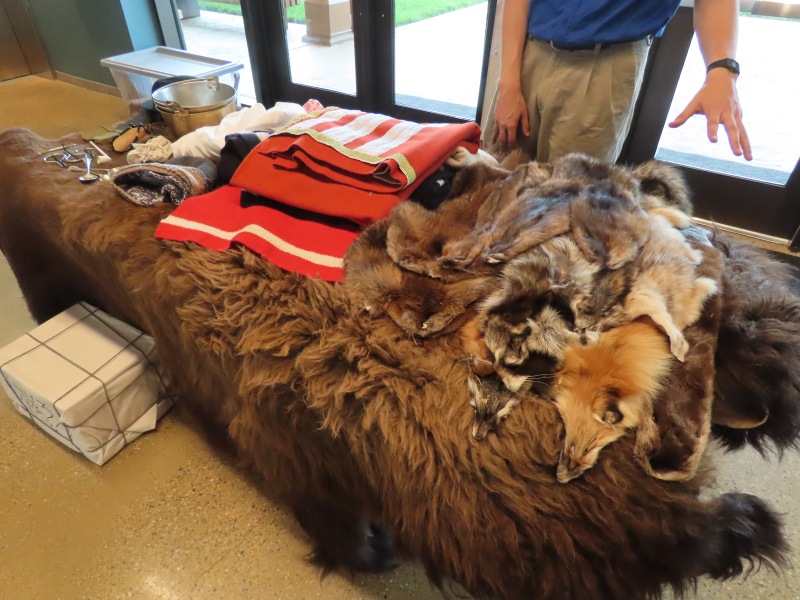
I had a fun conversation with a staff member about trade between Native Americans, who had furs the whites coveted, and blankets, clothing, hatchets, guns and metal goods, which the Native Americans swiftly came to depend on to make their lives easier. British goods were preferred over French goods, and Britain made a lot of money in this overseas trade.
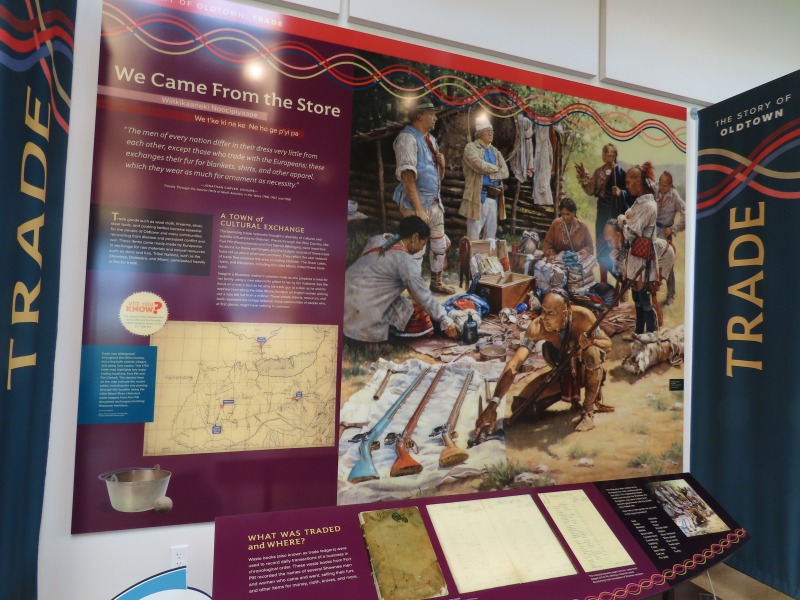
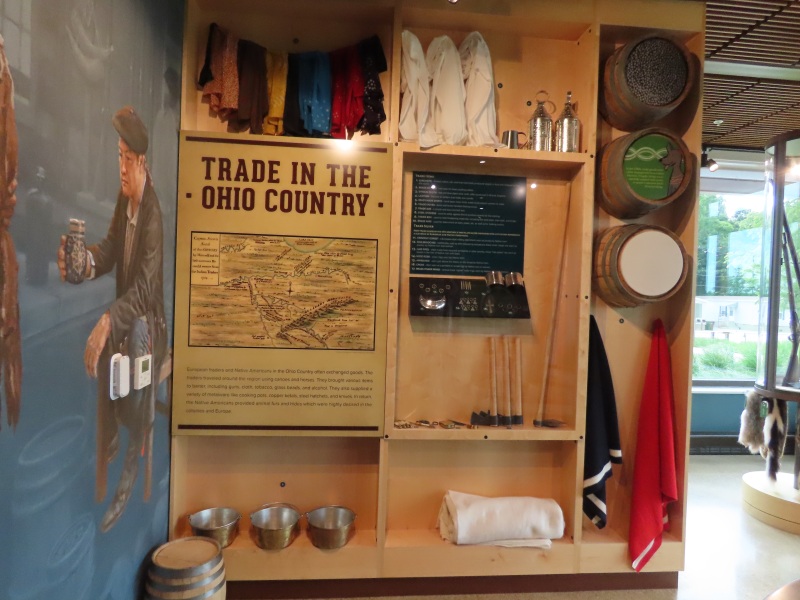
White traders did good business with Native Americans. The fur trade was a major economic industry in America and Europe. The exhibits were well-presented.
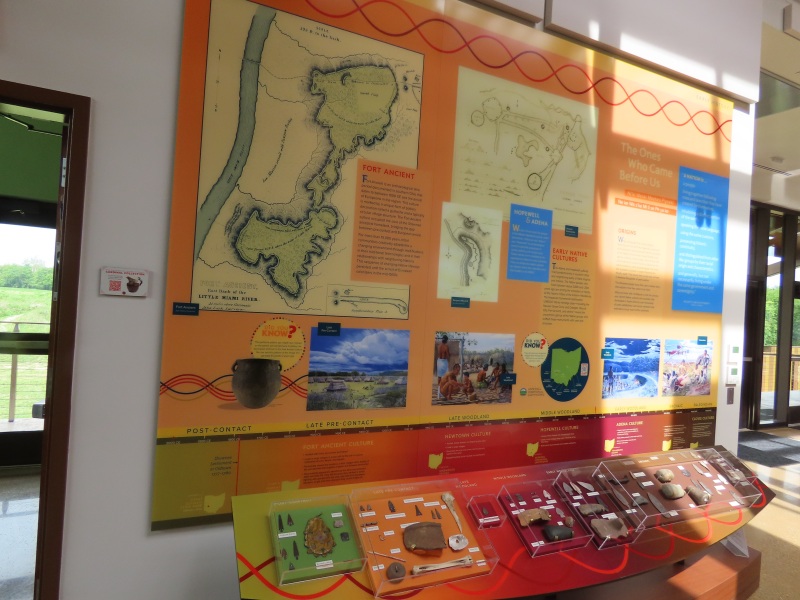
The shawnee enjoyed silver, wearing it as jewelry. They mostly attained silver from traders. Rumors persist of lost Shawnee silver hoards to this day.
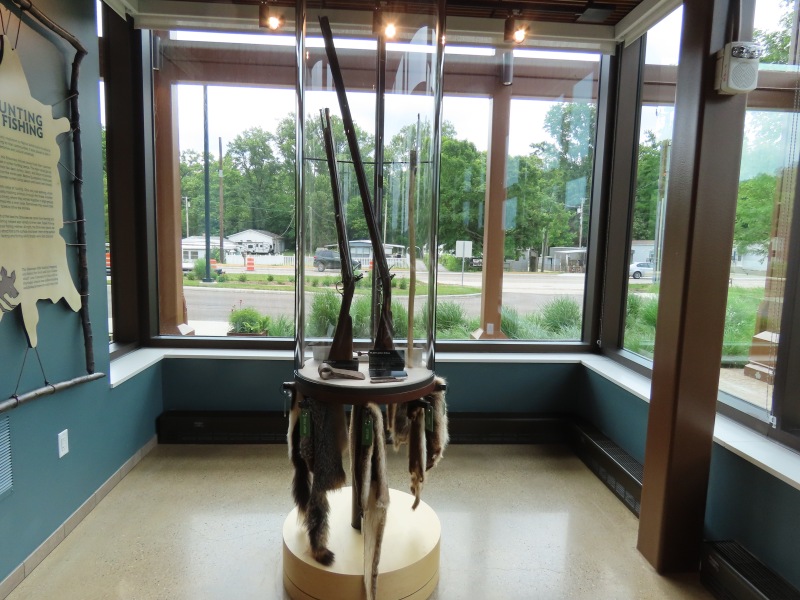
Guns allowed Shawnee hunters to more easily kill game, and to fight more efficiently. Often they could only buy lower-quality muskets from traders.
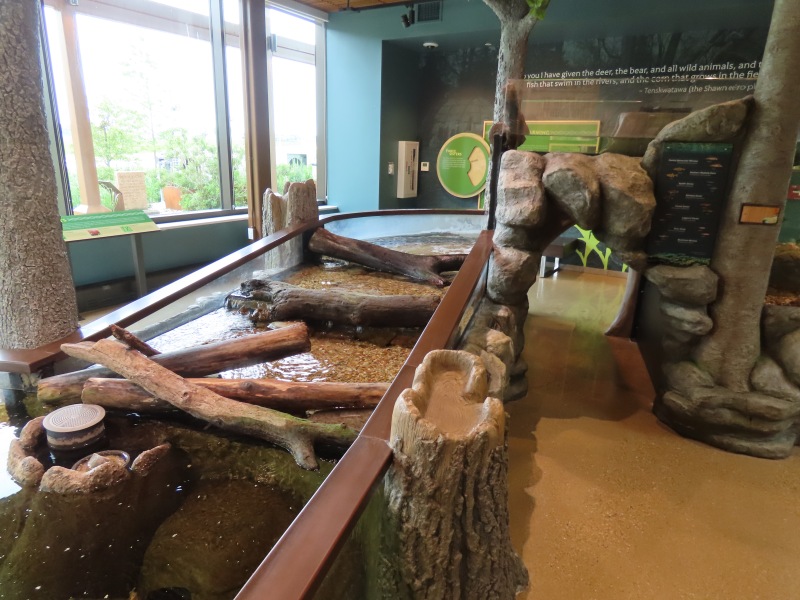
A nice feature was a simulated stream, populated with Ohio fish and amphibians.
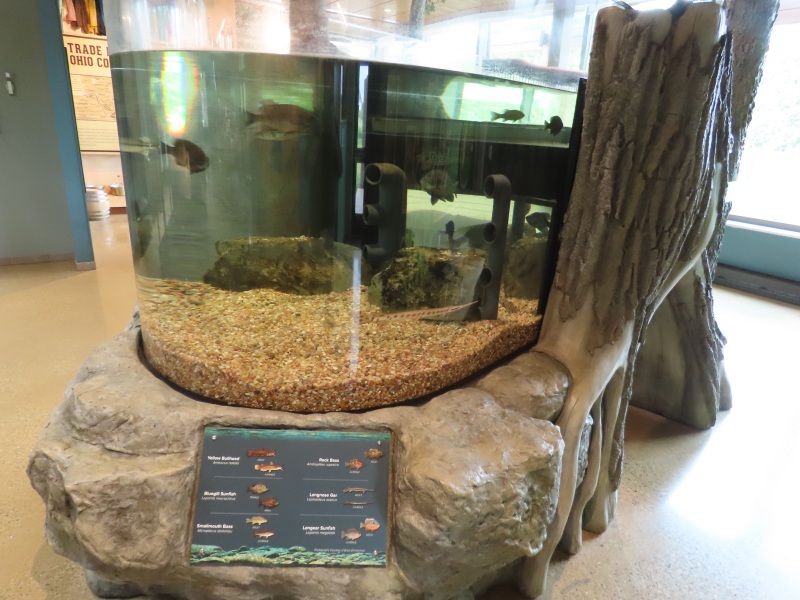
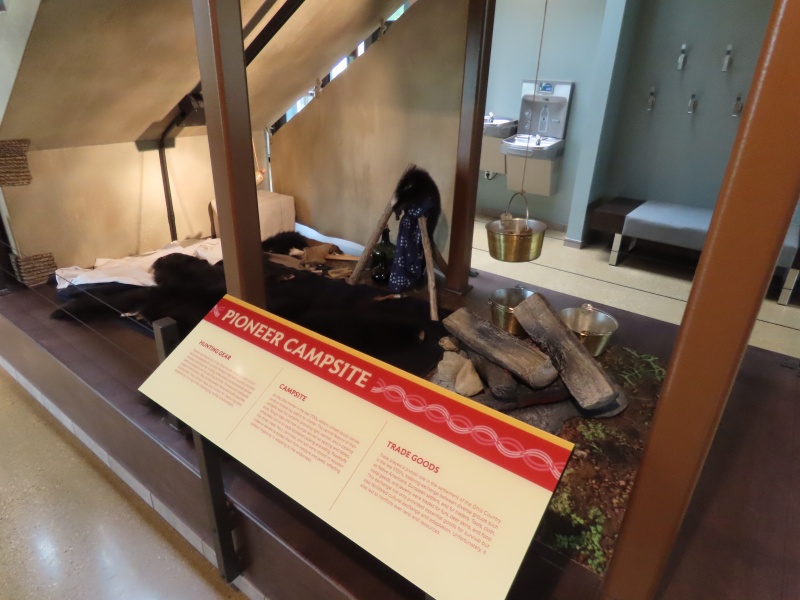
The center is worth a visit.
Tecumseh
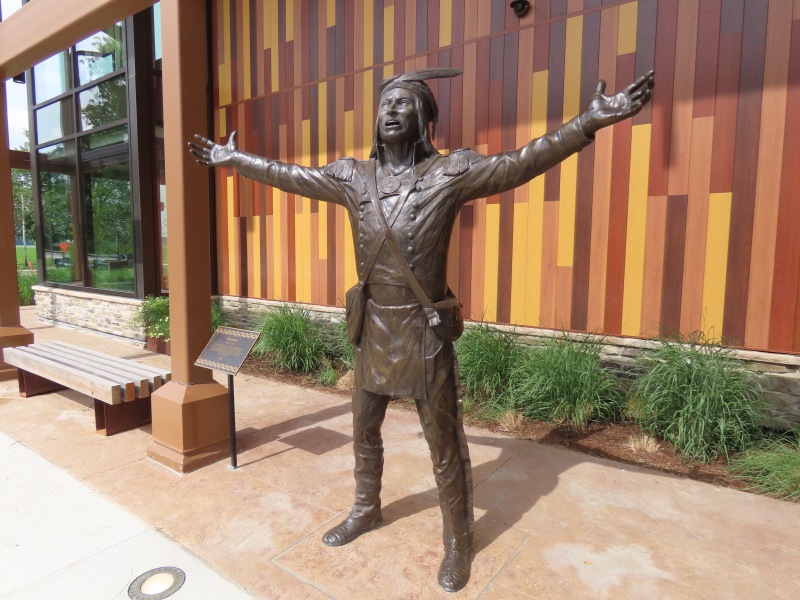
Tecumseh. Native Americans often dressed in trade clothes, with military garb being popular with warriors. They would wear medals given to them by whites.
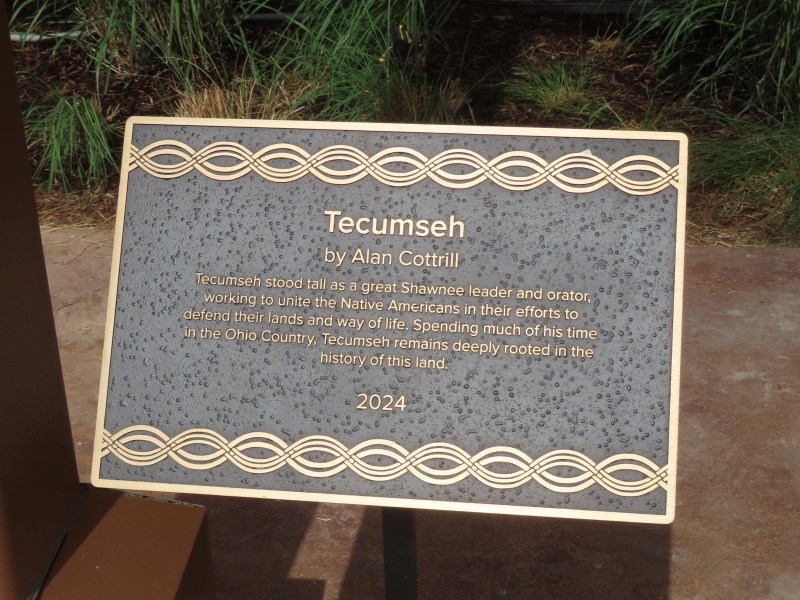
Tecumseh was a great chief of the Shawnee who worked for many years to unite Native American tribes to resist the encroaching white settlers from taking their land. A great warrior and speaker, he knew that only if the tribes united would they be able to fight the very numerous whites. This was a difficult challenge because tribes often were in conflict.
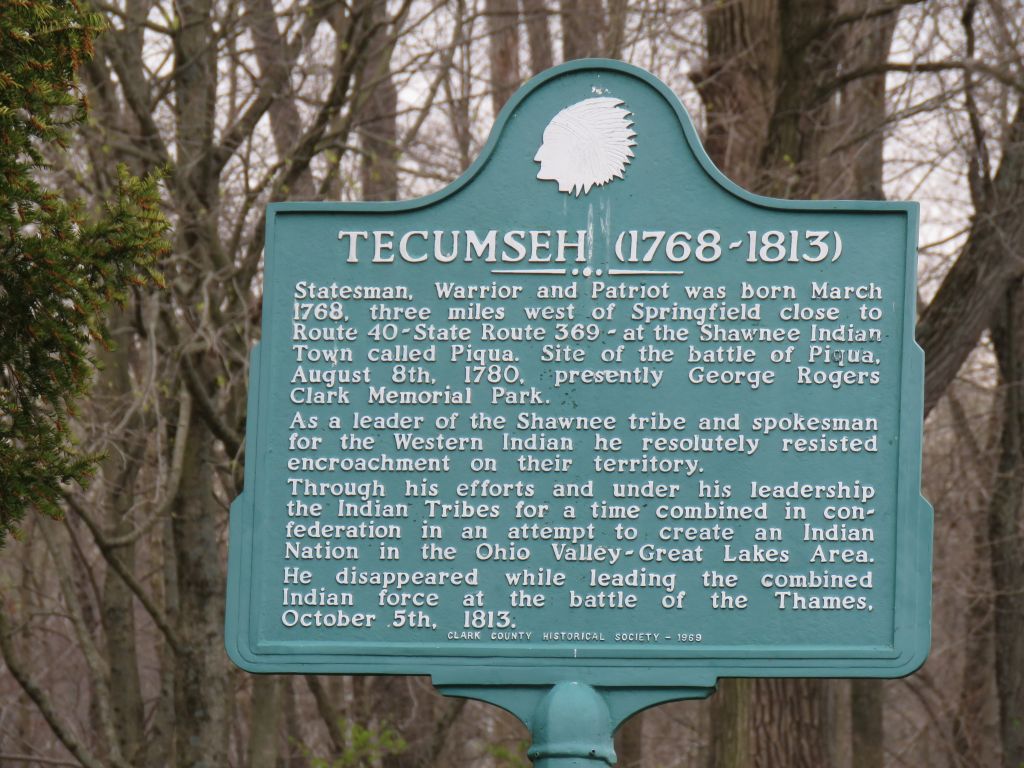
A marker at George Rogers Clark Park
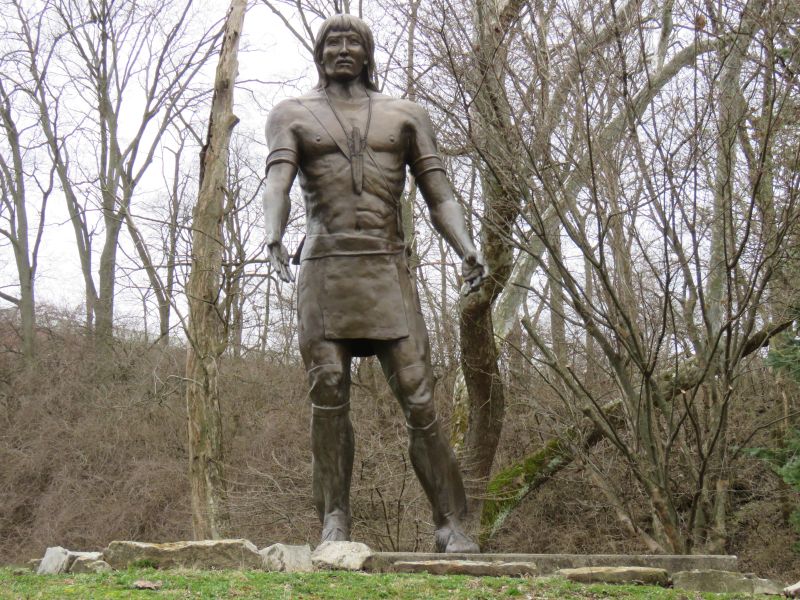
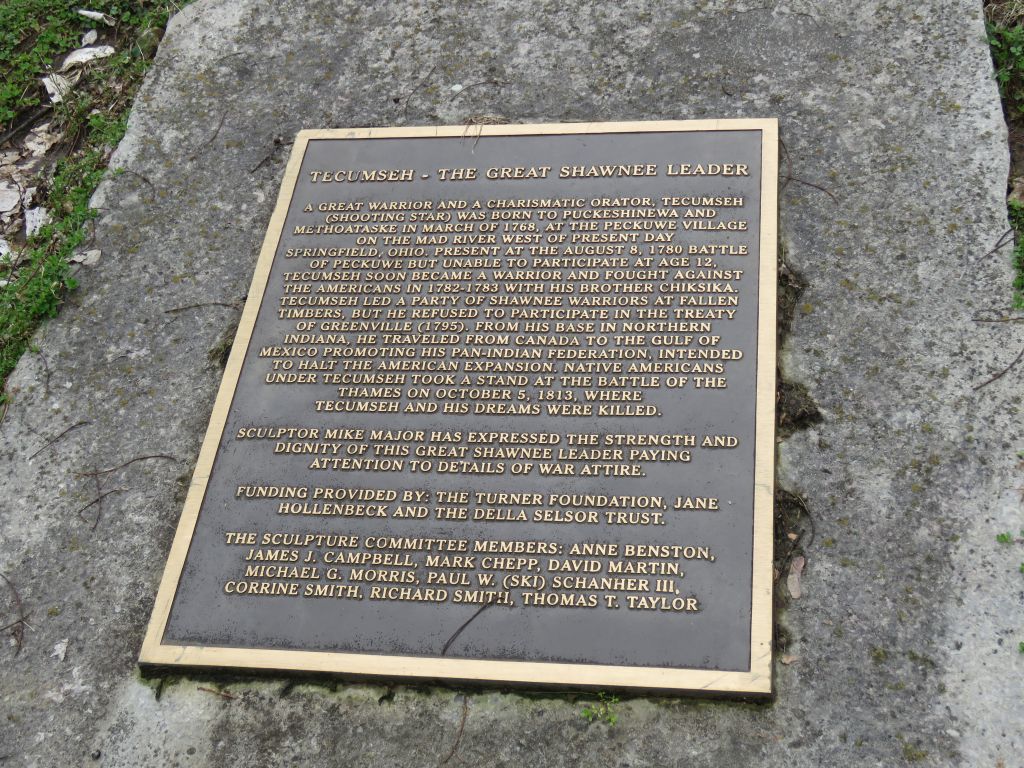
Tecumseh, whose name meant “shooting star” because he was born when a fireball streaked across the sky, was humanitarian- he urged his people to not torture captives, which was a traditional behavior. He also urged them to not depend on white trade goods and go back to traditional tools and ways, which did not go over well- so beneficial were guns, metal pots, hatchets, and other goods. He had white friends and was respected by all.
No tribe has the right to sell, even to each other, much less to strangers…. Sell a country! Why not sell the air, the great sea, as well as the earth? Didn’t the Great Spirit make them all for the use of his children? The way, the only way to stop this evil is for the red man to unite in claiming a common and equal right in the land, as it was first, and should be now, for it was never divided. We gave them forest-clad mountains and valleys full of game, and in return what did they give our warriors and our women? Rum, trinkets, and a grave.
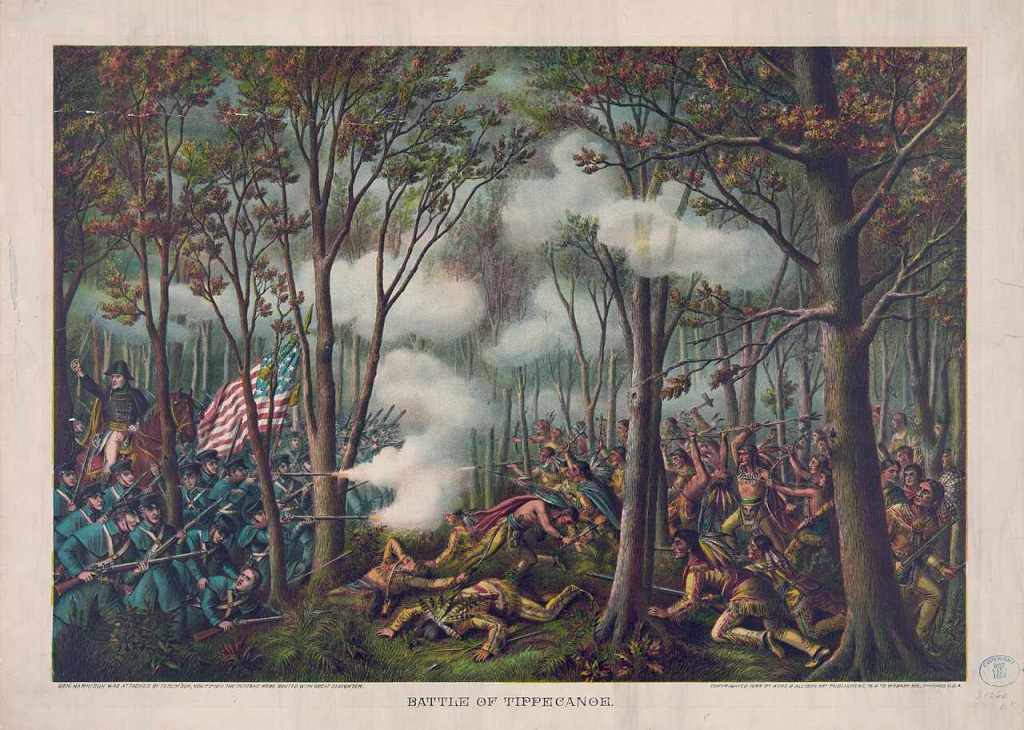
The Battle of Tippecanoe ( Wikipedia )
Tecumseh’s efforts against the white invasion ended in tragedy. His envious brother, called The Prophet, rashly directed Tecumseh’s men to attack the US Army near Prophetstown while Tecumseh was traveling to urge more tribes to join them. The Prophet told the warriors that they would be bulletproof- they were not. This was the Battle of Tippecanoe, and it ended Tecumseh’s dream forever. Future Northwest Territory governor and American president William Henry Harrison, who led the Army troops, was victorious.
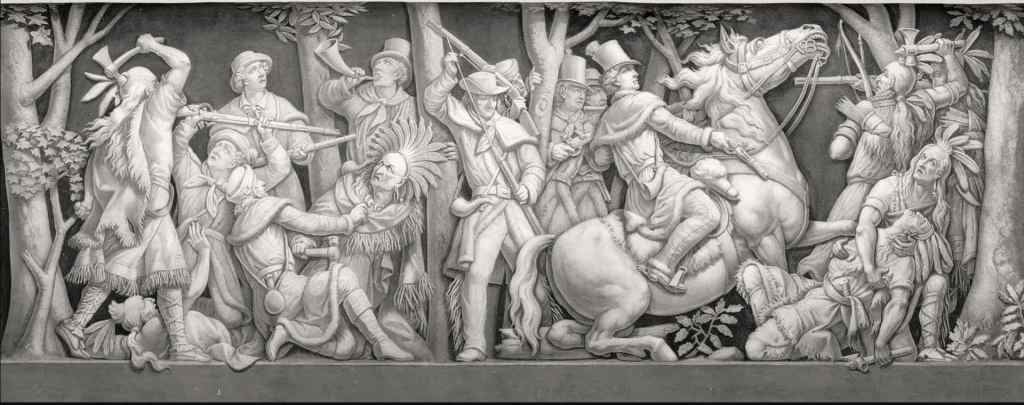
The death of Tecumseh ( The Capitol Story )
Two years later, Harrison and Tecumseh met at the Battle of the Thames in Canada during the War of 1812. Tecumseh sided with the British in a last stand for Native Americans, and was killed in the battle.
His body was buried by the Shawnees in a secret place. A legend about Tecumseh’s Curse persists.
The dream of a united Native American people resisting the taking of their land died with him.
Black Hoof (Catahecassa)
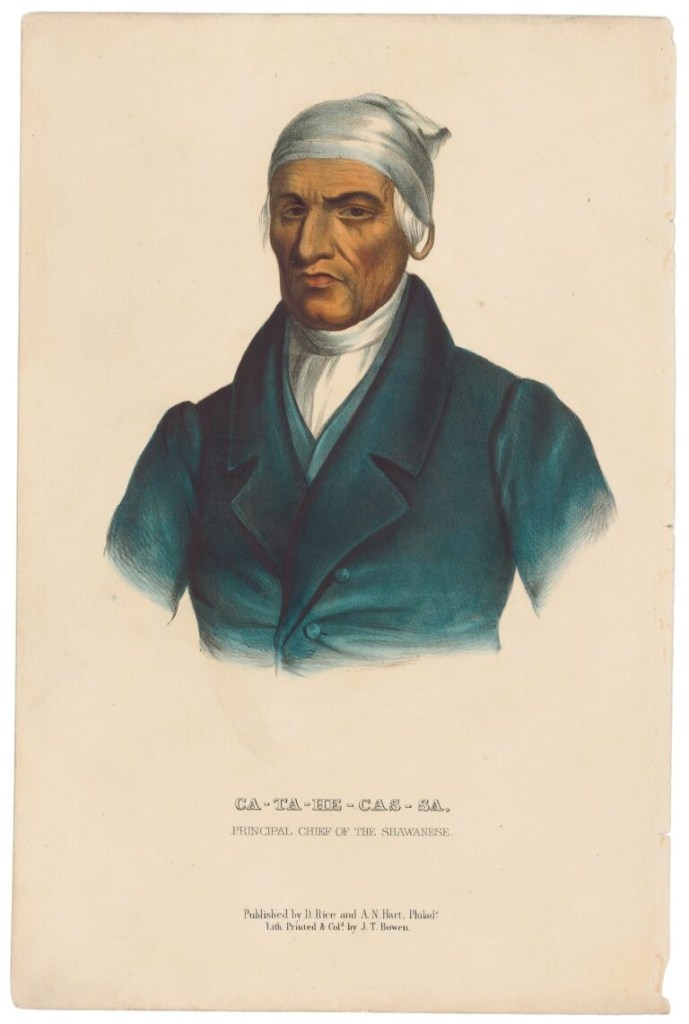
Black Hoof ( audubonart.com )
Another great Shawnee chief was Black Hoof. Black Hoof and Tecumseh were great rivals. While Tecumseh urged Native Americans to fight the whites, Black Hoof eventually saw that the massive never-ending flow of white settlers could not be stopped. He counseled the Shawnee to make treaties with the Americans.
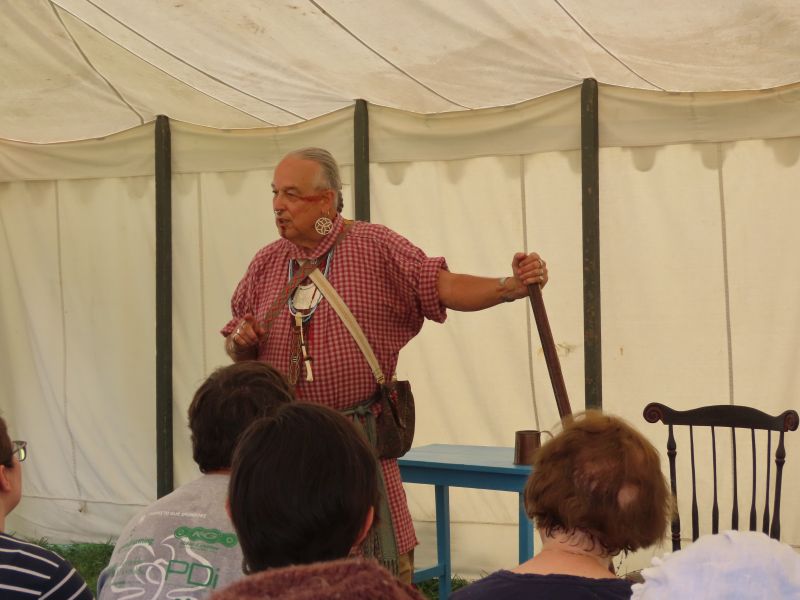
A re-enactor at the Fair at New Boston portrays Black Hoof
Black Hoof was a great warrior chief, fighting the encroaching whites over a long career, and fighting at many historical battles. He was the most experienced warrior of his tribe. But there came a time when he realized that the settlers were coming in far greater numbers than the Shawnee could fight. So he became an advocate for peace and treaties with the whites. He thought it best for the Shawnee to adapt to white ways of living. He signed the famous Treaty of Greenville, and traveled to Washington DC as a diplomat, with great oratorical skills.
“The United States government wanted to buy and possess our lands, and remove us out of the way.
I consented because I could not help myself, for I never knew them to undertake anything without accomplishing it.
I knew that I might as well give up first as last, for they were determined to have our lands.”
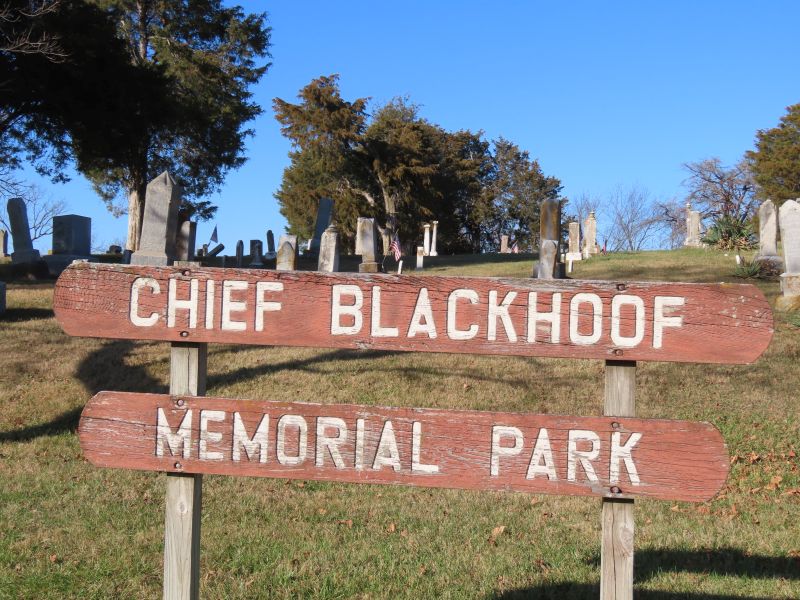
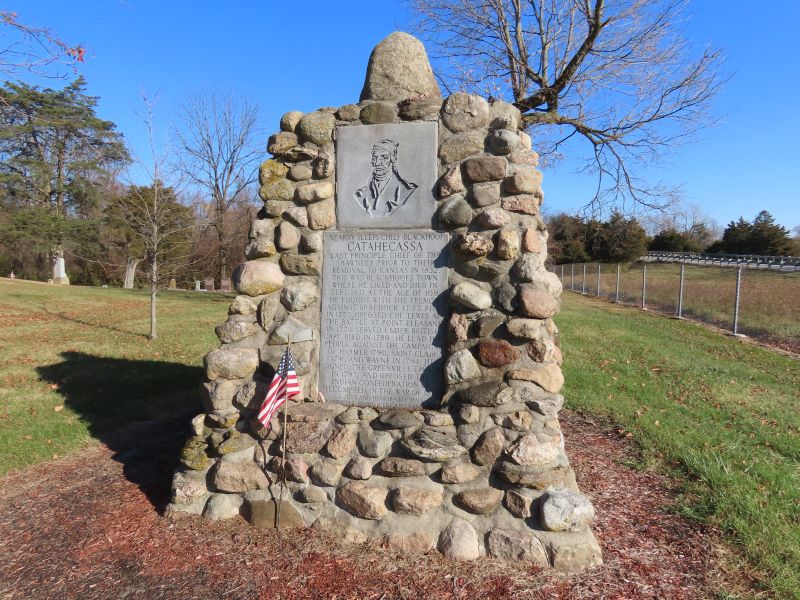
I traveled to St. Johns Ohio where Black Hoof is buried. He has a memorial at the cemetery.
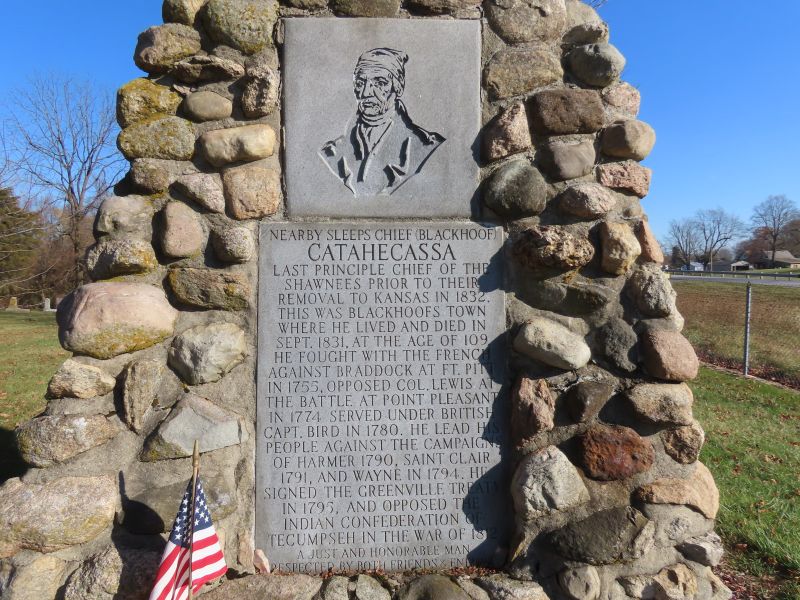
Like his rival Tecumseh, Black Hoof was respected by both whites and his people. He was largely responsible for peace between the Shawnee and Americans. He became an ally of the United States, and lived to be over 100 years of age.
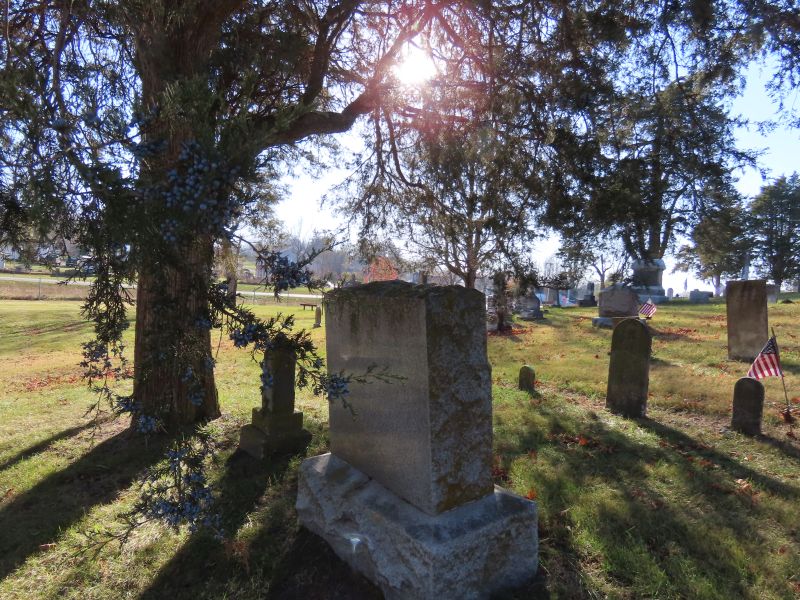
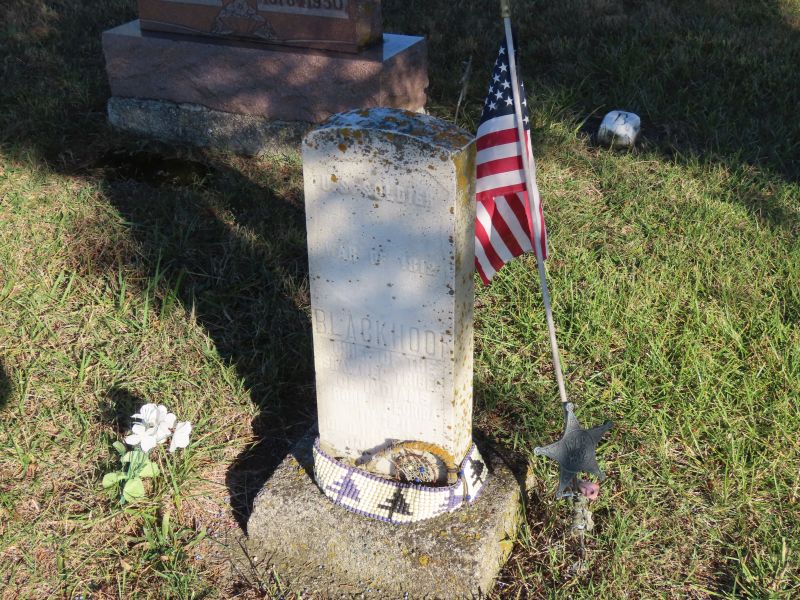
His grave is still remembered. Black Hoof sided with the Americans during the War of 1812, whereas Tecumseh and his remaining warriors sided with the British. The American flag and the veteran insignia recognizes Black Hoof’s service to our country in the War of 1812.
The Fate of the Shawnee
After the War of 1812, the Shawnee who had stayed in Ohio no longer fought America. Under Black Hoof’s leadership, they were given three reservations in Ohio. They invited Quakers to come live with them and teach them about white man’s ways and agricultural techniques. With some difficulty, I found a lonely marker showing where one of the reservations once was.
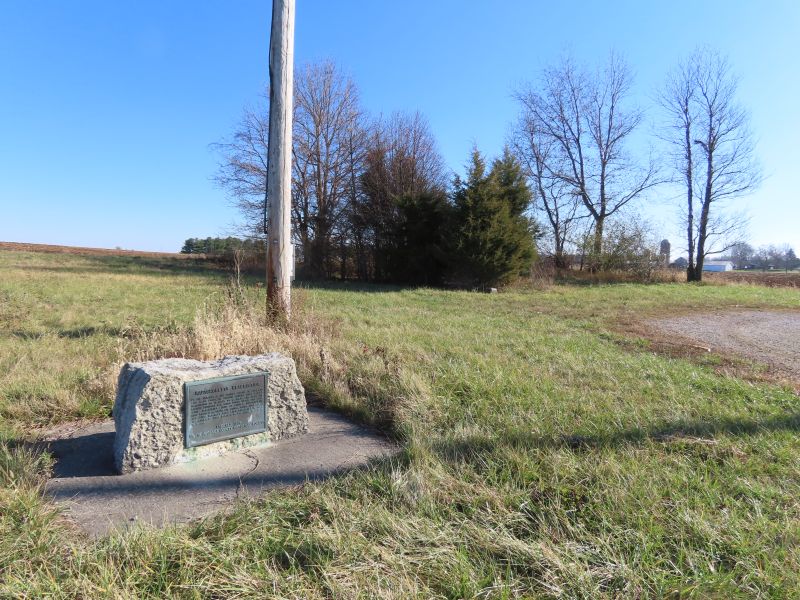
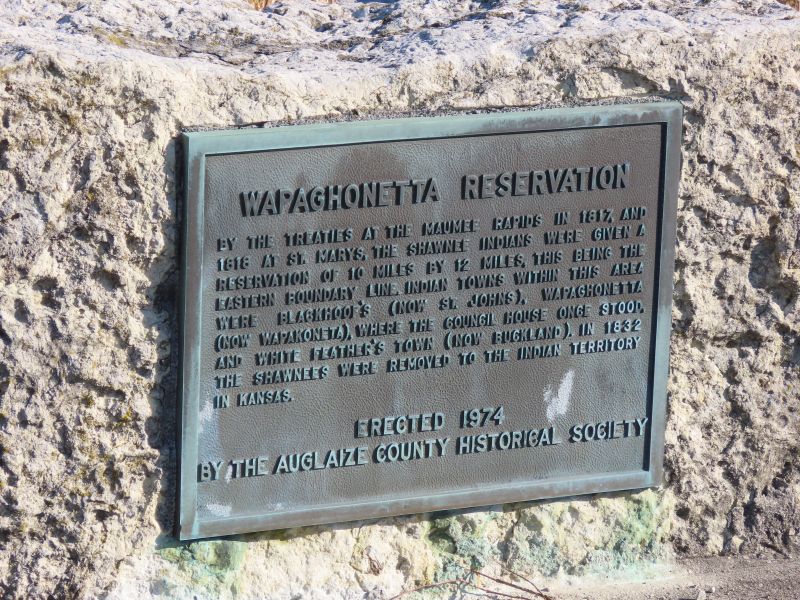
By 1830 pressure was put upon the Shawnee to move west. What little lands the Native Americans had left were coveted by Americans, despite the tribes striving to adopt white ways. This was the era of the Trail of Tears. Black Hoof resisted this while he was alive, but after he died in 1831, the next year saw the Shawnee give in and move to Missouri. This is known as Ohio’s Trail of Tears.
Today, the Shawnee tribe lives in Oklahoma, and are federally recognized. But there are still markers in Ohio where their history can be glimpsed.
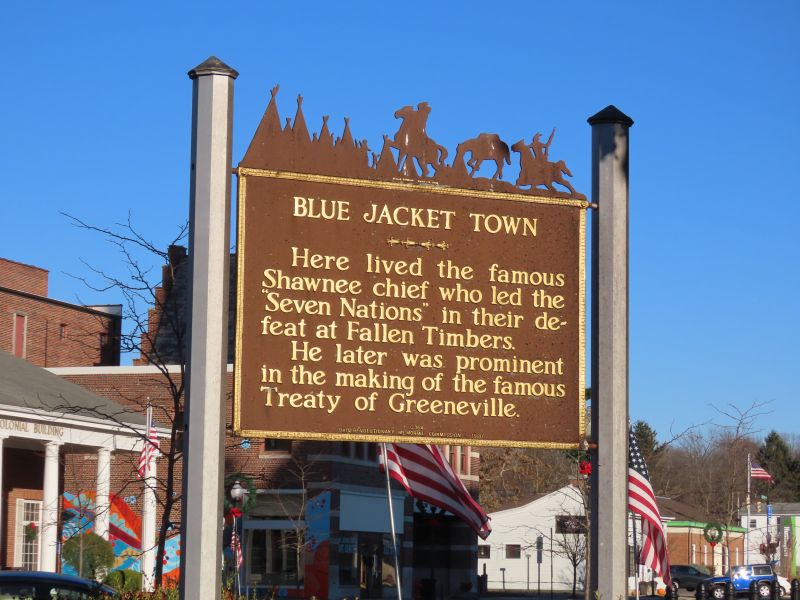
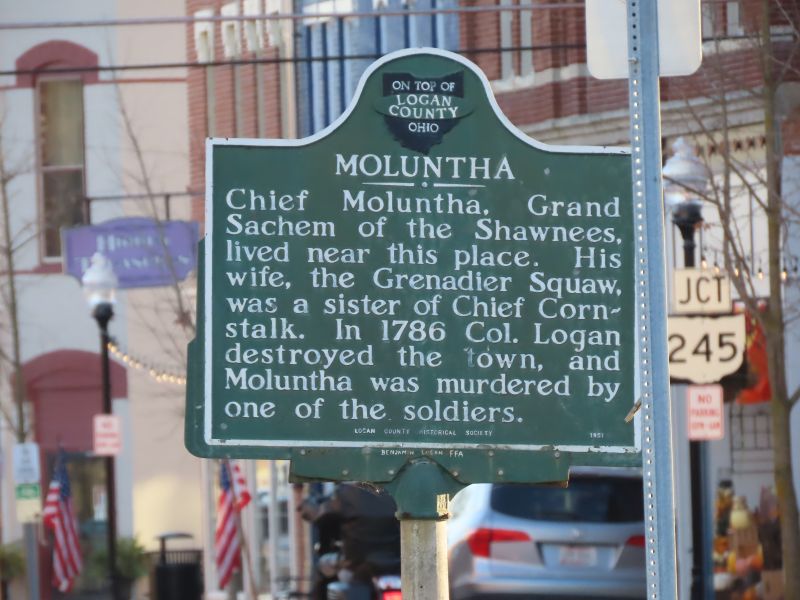
Both Tecumseh and Black Hoof did their best to lead the Shawnee against terrible odds when their land was taken. They had different strategies to deal with America, but both were great men who are remembered today.
George Rogers Clark Park


